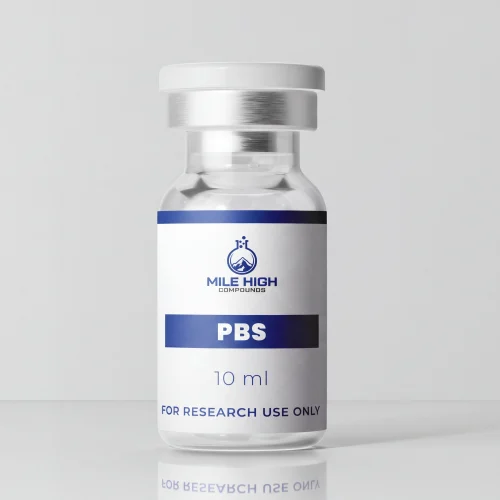
Phosphate Buffered Saline: 7 Essential Facts About Laboratory Uses and Safety
Phosphate Buffered Saline (PBS) is a buffered salt solution widely used in scientific research, biotechnology, and laboratory procedures. Its phosphate buffer helps maintain a relatively stable pH, while its dissolved salts provide a controlled ionic environment for working with biological samples.
Because PBS is useful in many experimental workflows, it is a common laboratory reagent in cell biology, immunology, and molecular biology. However, formulations can differ in concentration, composition, and sterility. Understanding these differences is essential when selecting Phosphate Buffered Saline for a particular research application.
1. What Is Phosphate Buffered Saline?
Phosphate Buffered Saline, commonly called PBS, is an aqueous solution containing phosphate salts and sodium chloride. Some formulations also contain potassium chloride or other specified components.
PBS is designed to help maintain pH within a defined range during laboratory procedures. It is available in different concentrations, including ready-to-use 1× solutions and concentrated stock solutions that require dilution according to the manufacturer’s instructions.
Although PBS is commonly used in biological research, it is not a universal solution for every experiment. Researchers should check the formulation, pH, concentration, and intended application before use.
2. Common Uses of PBS in Laboratory Research
Phosphate Buffered Saline supports a wide range of routine laboratory procedures. Its controlled composition makes it useful when researchers need a buffered solution for handling biological materials.
Common applications include:
- Rinsing cells and biological samples.
- Washing materials during immunological assays.
- Preparing and diluting compatible laboratory reagents.
- Handling selected biological specimens.
- Supporting molecular biology and biotechnology workflows.
The correct PBS formulation depends on the experimental protocol. For example, certain procedures require calcium-free or magnesium-free PBS because these ions can influence cellular activity or interfere with assay results.
3. Understanding PBS Composition and pH
A typical PBS formulation contains sodium chloride and phosphate salts, with some versions also containing potassium salts. Many commonly used formulations are adjusted to a pH near 7.4, although specifications vary by manufacturer and application.
The phosphate components help resist changes in pH, while sodium chloride contributes to the solution’s ionic strength. These characteristics make PBS useful for many procedures involving biological samples.
Concentration and pH should be verified against the relevant protocol. A concentrated stock solution is not equivalent to a ready-to-use solution, and incorrect dilution can affect experimental conditions and reproducibility.
4. PBS and Osmotic Balance
Some PBS formulations are designed to be approximately isotonic under specified conditions. Osmotic balance matters because water moves across cell membranes in response to differences in solute concentration.
Solutions with unsuitable osmotic properties can cause cells to swell, shrink, or lose viability. Temperature, formulation, exposure time, and the type of biological material can also influence results.
PBS does not contain all the nutrients required to sustain growing cells. It is therefore not a substitute for a complete cell culture medium, which supplies additional components needed for cell maintenance and growth.
5. Sterile PBS Versus Nonsterile PBS
Phosphate Buffered Saline is available in sterile and nonsterile forms. The appropriate type depends on the intended laboratory procedure and the requirements of the protocol.
Sterile PBS is manufactured and packaged to meet specified sterility requirements. Nonsterile PBS may be suitable for applications where sterility is not required, provided the relevant procedure allows it.
Sterility alone does not establish suitability for medical administration. A sterile research reagent may not meet the requirements for endotoxins, particulate matter, chemical purity, or manufacturing controls needed for a particular clinical application.
Always verify the product label and technical documentation rather than assuming that all PBS products are interchangeable.
6. Storage, Handling, and Product Quality
Proper storage and handling help maintain the quality of Phosphate Buffered Saline. Requirements vary depending on whether the product is supplied as a powder, concentrated solution, or ready-to-use liquid.
When evaluating a PBS product, check:
- Composition: Confirm the listed salts and formulation.
- Concentration: Determine whether it is a 1× solution or a concentrated stock.
- pH: Verify that it matches the intended application.
- Sterility: Check whether the product is sterile or nonsterile.
- Packaging: Ensure the container and seal are intact.
- Storage and expiration: Follow the manufacturer’s instructions.
Contamination, evaporation, incorrect dilution, or unsuitable storage can compromise a reagent’s performance. Laboratories should follow established quality-control procedures and the product manufacturer’s recommendations.
7. How to Choose the Right Phosphate Buffered Saline
Selecting the right PBS product begins with identifying the requirements of the experiment. Different procedures may require different concentrations, pH specifications, or ionic compositions.
Before choosing a product, consider whether the application requires calcium-free or magnesium-free PBS, whether a sterile solution is necessary, and whether the product is supplied in a ready-to-use format.
Researchers should also review the manufacturer’s technical documentation for compatibility with the intended assay or procedure. Product descriptions should state verified specifications clearly and avoid unsupported claims about universal compatibility.
Phosphate Buffered Saline is a valuable laboratory reagent when matched to the correct application. Choosing a formulation based on documented requirements helps support reliable and reproducible research.
Frequently Asked Questions About Phosphate Buffered Saline
What does PBS stand for?
PBS stands for Phosphate Buffered Saline, a buffered salt solution used in biological research and laboratory procedures.
What is Phosphate Buffered Saline used for?
PBS is commonly used for rinsing biological samples, washing cells, preparing compatible reagents, and supporting selected laboratory assays.
What is the typical pH of PBS?
Many standard PBS formulations have a pH near 7.4, but the exact value depends on the product specification.
Is PBS the same as normal saline?
No. Normal saline is generally a sodium chloride solution, while PBS contains phosphate buffer salts in addition to sodium chloride and may contain other salts.
Can sterile PBS be injected?
Sterile laboratory PBS should not be assumed suitable for injection. Medical administration requires a product specifically intended and authorized for the relevant use.
Conclusion
Phosphate Buffered Saline is a widely used laboratory reagent that helps maintain a controlled pH and ionic environment during many biological procedures. Its applications include sample rinsing, cell washing, reagent preparation, and selected research assays.
Because PBS formulations differ, researchers should confirm concentration, composition, pH, sterility status, and storage requirements before use. Laboratory-grade PBS should not be confused with a medical product intended for administration to humans.
Disclaimer: This article is for educational purposes only and is not medical advice. Use PBS according to the manufacturer’s specifications and the requirements of the relevant laboratory protocol.



Reviews
There are no reviews yet.