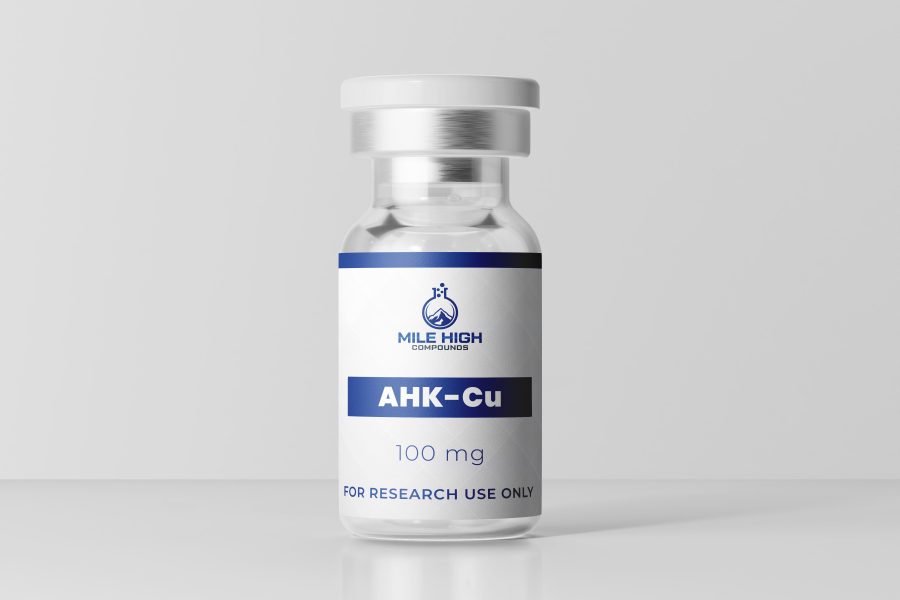
AHK-Cu: 7 Essential Facts About Hair Research, Skin Science, and Safety
AHK-Cu is a copper-binding tripeptide being investigated for its potential role in hair-follicle biology and skin-related research. Interest in this compound has grown because laboratory findings suggest it may influence dermal papilla cells, which are involved in hair follicle development and growth.
However, understanding AHK-Cu requires separating preliminary laboratory findings from proven cosmetic or medical outcomes. This guide from Mile High Compounds explores its structure, research, potential applications, limitations, and safety considerations.
1. What Is AHK-Cu?
This stands for alanyl-histidyl-lysine copper complex. It consists of a short peptide containing three amino acids—alanine, histidine, and lysine—associated with copper.
It belongs to the broader category of copper peptides, compounds studied for their interactions with biological processes involving cells and tissues. Its structure is related to this, another copper-binding peptide, but the two compounds are chemically distinct.
That distinction matters because research findings for one peptide cannot automatically establish the effectiveness or safety of another. It has a comparatively limited compound-specific research record, making careful interpretation essential.
2. What Does AHK-Cu Research Say About Hair Growth?
One of the principal published studies of it examined isolated human hair follicles and cultured dermal papilla cells. Researchers reported increased hair follicle elongation in an ex vivo model and increased proliferation of dermal papilla cells in laboratory culture.
The findings suggested that this may influence biological processes associated with hair follicle growth. However, these experiments were conducted outside the human body rather than in a clinical trial involving people experiencing hair loss.
This distinction is important: a laboratory result can identify a promising research direction, but it cannot establish that a product will regrow hair, increase hair density, or treat a particular type of hair loss in everyday use. Further controlled studies are needed.
3. How Does AHK-Cu Relate to Skin Research?
Copper peptides are studied for their interactions with cellular processes relevant to skin biology. These research areas include cell signaling, tissue-related pathways, and the behavior of skin-associated cells.
This is sometimes discussed alongside is in cosmetic and skin-care content. Nevertheless, the available evidence for is should not be treated as direct proof of it’s effects.
Researchers must evaluate each compound independently, considering its chemical structure, formulation, concentration, stability, and delivery method. Claims that AHK-Cu improves skin texture, reduces wrinkles, or accelerates skin repair require appropriate evidence specific to the formulation and intended use.
For now, AHK-Cu is best understood as a compound of scientific interest rather than an established treatment for skin concerns.
4. What Makes AHK-Cu Different From GHK-Cu?
AHK-Cu and GHK-Cu share a copper-binding peptide framework, but their amino acid sequences differ. AHK-Cu contains alanine in the first position, whereas GHK-Cu contains glycine.
Even a small structural difference can affect how a molecule behaves in a biological environment. Similarity alone does not establish identical activity, absorption, stability, or safety.
The scientific literature on GHK-Cu is broader than the compound-specific literature on AHK-Cu. Direct comparative evidence establishing that it performs better, worse, or equally well is lacking.
When evaluating product information, it is therefore important to check whether a claim comes from a study of AHK-Cu itself or has been extrapolated from another copper peptide.
5. What Are the Main Limitations of Current Evidence?
The main limitation is the lack of published human clinical evidence establishing the safety and effectiveness of this for hair growth or skin outcomes.
The principal hair-related study used laboratory cell cultures and isolated human hair follicles. These models can help researchers investigate biological mechanisms, but they do not reproduce every factor affecting living people, including circulation, immune responses, metabolism, and long-term exposure.
Other important unanswered questions include:
- Whether laboratory findings translate into measurable results in people.
- Which formulations, if any, can deliver the compound effectively to a target tissue.
- How stable the compound remains under different storage and formulation conditions.
- What adverse effects could occur with repeated or prolonged exposure.
- Whether different commercial products have consistent identity, purity, and composition.
These uncertainties mean that marketing statements should not be confused with demonstrated clinical outcomes.
6. What Should Consumers Know About AHK-Cu Safety?
A limited research record also means that the safety profile of it is not well established. Safety information from related copper peptides cannot replace compound-specific testing.
Product quality is another consideration. Labels alone do not independently verify a product’s identity, purity, concentration, sterility, or suitability for a particular route of administration.
This should not be assumed safe for injection, ingestion, or other uses simply because it is described as a peptide or copper complex. Experimental products should not replace medical evaluation or established treatments for hair loss or skin conditions.
Anyone considering a product containing an experimental ingredient should consult a qualified healthcare professional, especially if they have an existing condition, use medication, or experience an unexpected reaction. Regulatory status and permitted uses can vary by country and product type.
7. What Is the Future of AHK-Cu Research?
Future research could examine it’s molecular interactions, formulation stability, delivery into relevant tissues, and effects in more comprehensive biological models.
Well-designed human studies would be necessary to determine whether the laboratory findings translate into meaningful benefits. Such research would also need to assess adverse effects, appropriate endpoints, and differences between formulations.
Until stronger evidence becomes available, AHK-Cu remains an interesting example of how researchers investigate short peptides and copper-associated biological pathways. Its potential should be discussed alongside the substantial questions that remain unanswered.
Frequently Asked Questions About AHK-Cu
What is AHK-Cu used for in research?
This is studied primarily in relation to hair-follicle biology and dermal papilla cells. Its potential applications remain experimental.
Has AHK-Cu been proven to regrow hair in humans?
No published human clinical evidence has established that it regrows hair or treats hair loss. The principal study investigated isolated human hair follicles and cultured cells in laboratory conditions.
Is AHK-Cu the same as GHK-Cu?
No. Both are copper-binding tripeptides, but they have different amino acid sequences and distinct evidence bases.
Is AHK-Cu FDA-approved as a hair-loss treatment?
This is not an FDA-approved drug for treating hair loss. Its regulatory status and permitted use depend on the specific product and jurisdiction.
Is AHK-Cu safe?
Its safety has not been established through adequate human clinical research. The available evidence is insufficient to make broad assurances about safety or long-term effects.
Conclusion
This is a copper-binding tripeptide with preliminary laboratory findings relevant to hair-follicle research. Although these results offer a scientific basis for further investigation, they do not prove that it delivers hair-growth or skin-care benefits in humans.
For readers researching copper peptides, the most reliable approach is to distinguish compound-specific evidence from broader claims about related ingredients. Mile High Compounds encourages evidence-based evaluation, transparent product information, and responsible discussion of experimental compounds.
Educational disclaimer: This article is for informational and educational purposes only. It is not medical advice and does not establish the safety, effectiveness, or suitability of AHK-Cu for human use.


Reviews
There are no reviews yet.