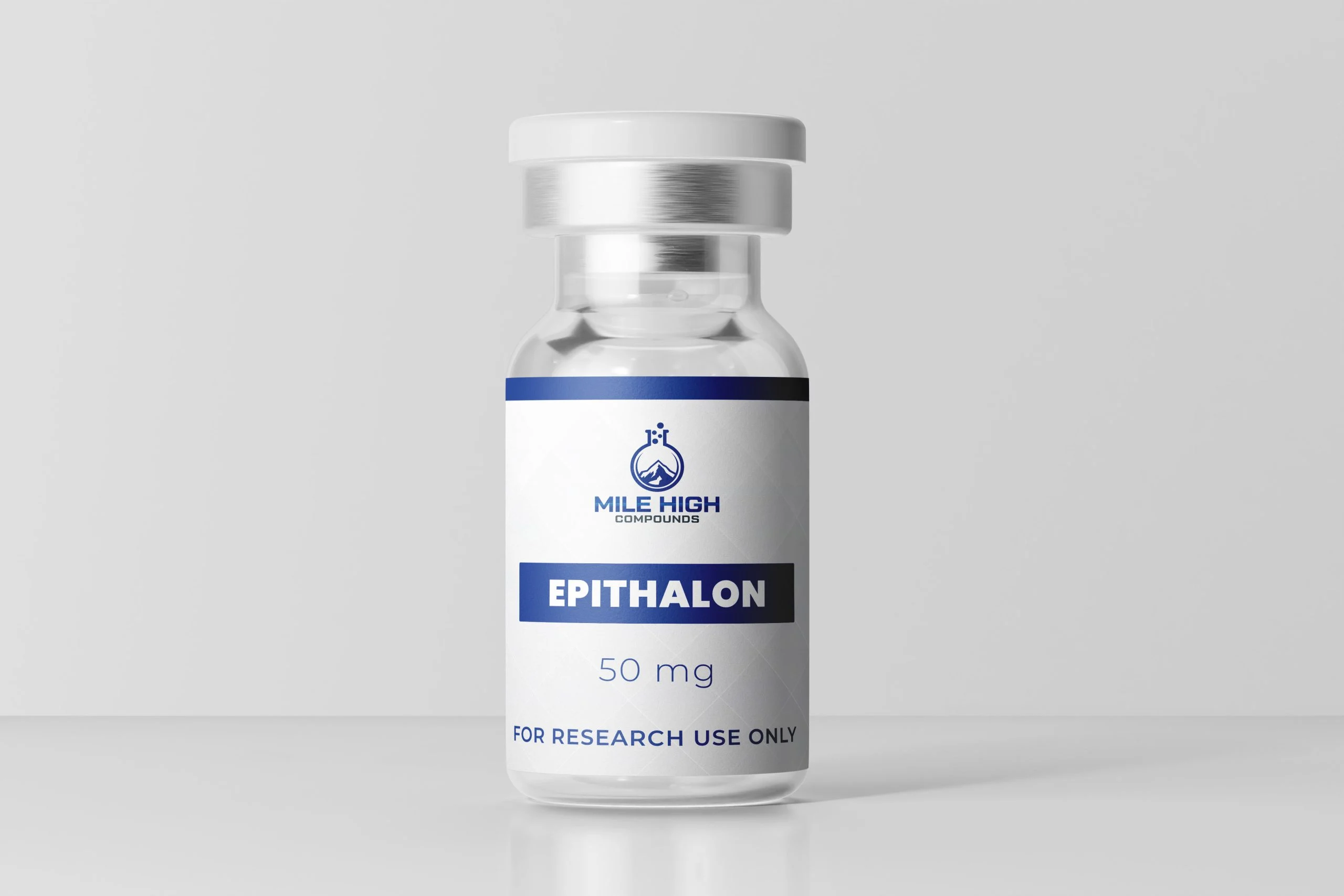
Epithalon: 7 Essential Facts About Anti-Aging Research and Safety
Epithalon, also spelled Epitalon, is a synthetic tetrapeptide studied for its potential effects on cellular aging, telomere maintenance, and circadian biology. Interest in Epithalon has increased because of research exploring how cells regulate aging-related processes. However, promising laboratory findings do not establish that a peptide extends human lifespan or prevents age-related diseases.
This guide from Mile High Compounds explores it’s structure, proposed mechanisms, scientific evidence, potential risks, and regulatory status.
1. What Is Epithalon?
This is generally identified as a synthetic peptide consisting of four amino acids: alanine, glutamic acid, aspartic acid, and glycine. Its sequence is abbreviated as Ala-Glu-Asp-Gly (AEDG).
The compound is associated with research into the pineal gland, a structure involved in regulating circadian rhythms and melatonin secretion. this was developed within a research tradition investigating short peptides and their possible effects on cellular regulation.
This should not be confused with epithalamin. Epithalamin is a pineal-derived polypeptide preparation, whereas it is a chemically defined synthetic tetrapeptide. Research involving one cannot automatically establish the safety or effectiveness of the other. <Cite refs={[“turn822435search0″,”turn822435search4”]}/>
2. How Does Epithalon Supposedly Work?
One major research interest is the relationship between Epithalon and telomeres. Telomeres are protective DNA-protein structures at the ends of chromosomes that generally shorten as many cells divide.
Some laboratory studies suggest that it may influence telomerase-related pathways. Telomerase is an enzyme that can maintain or extend telomeres in certain cell types. Researchers have also investigated possible effects on oxidative stress, cellular signaling, and biological rhythms.
These proposed mechanisms remain under investigation. Telomere length is only one aspect of cellular aging, and changing a laboratory marker does not automatically improve health or extend lifespan. The effects observed in cultured cells may not occur in the same way in a living human body. <Cite refs={[“turn822435search2″,”turn822435search3”]}/>
3. What Does the Scientific Research Show?
A 2003 laboratory study reported that it exposure was associated with increased telomerase activity and telomere elongation in human fetal fibroblast cultures. This provided a research basis for further investigation into the peptide’s potential cellular effects. <Cite refs={[“turn822435search2”]}/>
A later study published in 2025 investigated telomere-related effects in normal human cell models and cancer cell lines. The researchers reported changes in telomere length and related biological pathways. However, the study was conducted in cell cultures, not in people, and a correction to the publication means its findings should be interpreted cautiously. <Cite refs={[“turn822435search3″,”turn822435search6”]}/>
A 2026 review of it and Epithalamin concluded that human evidence remains limited, with no adequately powered randomized clinical trial establishing therapeutic effectiveness. The review also emphasized that historical research on Epithalamin should not be treated as direct evidence for synthetic it. <Cite refs={[“turn822435search0″,”turn822435search4”]}/>
4. Epithalon and Longevity Claims
This is frequently marketed online for longevity, healthy aging, and cellular rejuvenation. These claims are often linked to its proposed effects on telomeres and telomerase.
However, evidence that a compound changes telomere-related markers in cells does not demonstrate that it slows human aging. Longevity involves numerous interacting processes, including genetics, immune function, metabolism, environmental exposures, and lifestyle.
There is currently insufficient clinical evidence to conclude that it extends human lifespan, reverses biological aging, prevents age-related diseases, or improves overall health in healthy adults.
Responsible interpretation requires separating research hypotheses from proven clinical outcomes. Further studies would need to establish reproducible biological effects and demonstrate meaningful benefits in carefully designed human trials.
5. Safety and Potential Risks
It’s safety profile is not adequately established for human use. Important unanswered questions include its absorption, distribution, metabolism, elimination, interactions, and effects following repeated or long-term exposure.
The US Food and Drug Administration has raised concerns about the potential immunogenicity of it-related substances used in compounded products, including risks associated with peptide aggregation and impurities. The agency has also noted that sufficient clinical safety data are lacking, particularly for proposed injectable use. <Cite refs={[“turn822435search20”]}/>
Telomerase-related activity also warrants careful investigation because telomere maintenance can be relevant to cancer biology. This does not establish that it causes cancer, but it means long-term oncological safety cannot be assumed from laboratory findings.
Product identity, purity, sterility, and storage conditions are additional concerns for unapproved research products. A supplier’s label or purity claim alone does not establish suitability for human administration.
6. Is Epithalon FDA-Approved?
This is not an FDA-approved medication in the United States. Its availability through online research suppliers or peptide vendors does not establish that it has been evaluated and approved for treating disease, promoting longevity, or preventing aging.
In 2026, the FDA reviewed it-related substances in the context of its bulk drug substances for compounding process. The agency’s scientific review identified insufficient human safety information and potential risks involving immunogenicity and impurities. An advisory committee recommendation or review process should not be confused with FDA approval. <Cite refs={[“turn822435search20″,”turn822435search4”]}/>
Regulatory requirements vary by country. Anyone researching it should verify the applicable local rules and distinguish laboratory research status from authorization for human medical use.
7. What Should You Know Before Evaluating Epithalon?
Before accepting claims about this, consider whether the information is supported by direct and independently replicated evidence.
Key questions include:
- Was the research conducted in human participants, animals, or cultured cells?
- Did it measure actual health outcomes or only cellular biomarkers?
- Were the findings independently replicated?
- Did the study evaluate of itself or the different preparation Epithalamin?
- Are adverse effects and long-term safety adequately documented?
- Is the product’s identity and quality independently verified?
These questions help distinguish genuine scientific investigation from promotional language. More research is needed to establish whether this has any safe and clinically meaningful role in human health.
Frequently Asked Questions About Epithalon
What is Epithalon?
This is a synthetic tetrapeptide with the amino-acid sequence Ala-Glu-Asp-Gly, investigated for possible effects on cellular aging and biological rhythms.
Does Epithalon increase telomere length?
Laboratory studies have reported changes in telomere-related pathways and telomere length in cultured cells. These findings do not establish that it lengthens telomeres in people or extends human lifespan.
Is Epithalon the same as Epithalamin?
No. it is a synthetic four-amino-acid peptide, while Epithalamin is a distinct pineal-derived polypeptide preparation.
Is Epithalon proven to reverse aging?
No. Current evidence does not establish that Epithalon reverses human aging or extends lifespan.
Is Epithalon FDA-approved?
No. this is not an FDA-approved medication in the United States, and its safety for human use has not been adequately established.
Conclusion
This is an experimental peptide studied for its potential effects on telomere maintenance, cellular processes, and biological rhythms. Although laboratory findings provide avenues for further research, they do not demonstrate that the compound reverses aging, prevents disease, or extends human life. Reliable clinical evidence and comprehensive safety studies remain necessary before its potential medical value can be established.
Educational disclaimer: This article is intended for informational and scientific education purposes only. It is not medical advice and does not recommend experimental compounds for diagnosing, treating, curing, or preventing disease.


Reviews
There are no reviews yet.