
Thymosin Alpha-1: 7 Essential Facts About Immune Research and Safety
Thymosin Alpha 1 is an immunomodulatory peptide studied for its potential role in regulating immune-system activity. Also known as Tα1 or thymalfasin, this 28-amino-acid peptide has been investigated in clinical research involving chronic viral infections, sepsis, and cancer-related treatment. However, research findings vary by condition, and results do not establish that every proposed use is effective or safe.
Mile High Compounds provides educational information to help readers understand research compounds, scientific evidence, and important safety considerations.
1. What Is Thymosin Alpha-1?
Thymosin Alpha-1 is a peptide originally identified in preparations derived from the thymus, an organ involved in the development and maturation of immune cells. Synthetic thymalfasin has the same amino-acid sequence as naturally occurring Thymosin Alpha-1.
The peptide is classified as an immunomodulator because it may influence how immune cells communicate and respond to biological threats. Researchers have investigated its potential role in supporting immune responses in specific clinical settings. Thymosin Alpha 1 Thymosin Alpha 1 v v Thymosin Alpha 1 Thymosin Alpha 1 Thymosin Alpha 1 Thymosin Alpha 1 Thymosin Alpha 1 Thymosin Alpha 1 Thymosin Alpha 1 Thymosin Alpha 1 Thymosin Alpha 1 Thymosin Alpha 1 Thymosin Alpha 1
Thymosin Alpha-1 should not be confused with thymosin beta-4 or TB-500. These are different compounds with distinct structures and research histories. <Cite refs={[“turn603609search0″,”turn603609search12”]}/>
2. How Does Thymosin Alpha-1 Work?
Research suggests that Thymosin Alpha-1 may influence both innate and adaptive immunity. Investigated mechanisms include effects on T cells, dendritic cells, natural killer cells, antigen presentation, and immune-signaling pathways.
These mechanisms are scientifically relevant because effective immune responses depend on coordinated communication between different cell types. Nevertheless, changing immune activity does not automatically produce a meaningful clinical benefit.
The effects may depend on the disease being studied, the patient’s immune status, and other treatments being used. Proposed mechanisms should therefore be interpreted as areas of scientific investigation rather than proof that the peptide improves immunity in healthy individuals. <Cite refs={[“turn603609search0″,”turn603609search10”]}/>
3. What Are the Potential Research Applications?
Thymosin Alpha-1 has been investigated in several medical research areas:
- Chronic viral infections: Clinical studies have evaluated thymalfasin in conditions including chronic hepatitis B.
- Sepsis: Researchers have examined whether immune modulation can improve outcomes in critically ill patients.
- Cancer research: Studies have investigated the peptide as an adjunct to certain cancer treatments.
- Vaccine-related research: Some studies have explored whether it may influence immune responses to vaccination in selected populations.
These applications represent research areas, not universally established benefits. Evidence from one disease cannot be assumed to apply to another, and results from combination treatments do not establish the independent effect of the peptide.
The quality of evidence also differs across indications. Study size, methodology, patient characteristics, and the outcomes measured all affect how confidently researchers can interpret results. <Cite refs={[“turn603609search3″,”turn603609search10”]}/>
4. What Does Clinical Evidence Show?
Thymosin Alpha-1 has been studied in human clinical trials, making its evidence base different from that of compounds investigated exclusively in laboratory experiments.
However, clinical investigation does not guarantee effectiveness. In a large phase 3 randomized trial involving patients with sepsis, Thymosin Alpha-1 did not significantly reduce 28-day mortality compared with placebo. This finding highlights the importance of evaluating actual patient outcomes rather than relying only on proposed biological mechanisms. <Cite refs={[“turn603609search10″,”turn603609search11”]}/>
Research involving chronic hepatitis B has produced potentially encouraging findings, but systematic evidence assessments have also identified limitations in the certainty of available results. More research may be needed to clarify the magnitude and reliability of benefits for particular patient groups.
Claims that Thymosin Alpha-1 universally prevents infections, reverses aging, treats autoimmune disease, or enhances general wellness are not established by these findings.
5. Is Thymosin Alpha-1 FDA Approved?
Thymosin Alpha-1 is not FDA-approved for general medical use in the United States. The FDA has stated that it is not a component of an approved drug and has raised concerns about its use in compounded preparations. <Cite refs={[“turn603609search4″,”turn603609search12”]}/>
Regulatory status differs internationally. Thymalfasin has been approved or marketed for certain indications in some countries, but authorization in one jurisdiction does not mean that every formulation or use is approved elsewhere.
The FDA has identified concerns involving potential immunogenicity, peptide-related impurities, and difficulties characterizing the active ingredient in compounded products. Compounded medicines are not FDA-approved and do not undergo the same premarket review for safety, effectiveness, and manufacturing quality as FDA-approved medicines.
Readers should verify the applicable local regulations and distinguish authorized pharmaceutical products from materials sold for laboratory research.
6. Safety, Side Effects, and Precautions
The existence of clinical research does not establish that all formulations are safe for every individual or that long-term risks are fully understood.
Potential concerns include injection-site reactions, hypersensitivity, immune-related effects, and risks associated with product quality. The likelihood and severity of adverse effects can vary according to the preparation, route of administration, and individual circumstances.
Unverified products may also contain impurities, incorrect concentrations, or substances that do not match their labels. A product description or supplier-provided certificate alone cannot establish clinical safety.
People receiving cancer treatment, immunosuppressive therapy, or care for serious infections should discuss any proposed immune-modulating treatment with a qualified healthcare professional. Research-labeled products should not be used as substitutes for approved treatment or medical supervision.
7. Evaluating Thymosin Alpha-1 Research Products
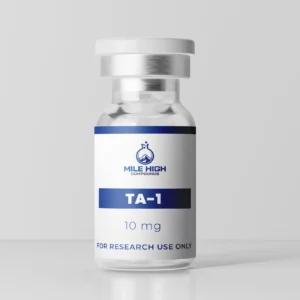
Responsible research begins with accurate identification, documentation, and an understanding of the material’s intended use.
When reviewing research documentation, consider:
- Whether the compound’s identity and sequence are clearly specified.
- Whether analytical testing and batch-specific quality records are available.
- Whether storage and handling requirements are documented.
- Whether the supplier clearly distinguishes research materials from authorized medicines.
- Whether promotional claims accurately reflect the available scientific evidence.
Analytical documentation may help characterize a particular batch, but it does not prove clinical effectiveness, establish suitability for human use, or confer regulatory approval.
For researchers and readers alike, the essential principle is to separate laboratory findings, clinical outcomes, and regulatory status. Each addresses a different question and should be evaluated independently.
Frequently Asked Questions
What is Thymosin Alpha-1?
Thymosin Alpha-1 is a 28-amino-acid immunomodulatory peptide studied for its effects on immune-cell activity and its potential role in selected medical conditions.
Is Thymosin Alpha-1 the same as thymalfasin?
Thymalfasin is the name used for a synthetic form of Thymosin Alpha-1. The names are closely related, but the regulatory status of a specific product depends on its formulation and jurisdiction.
Is Thymosin Alpha-1 FDA-approved?
No. It is not FDA-approved for general medical use in the United States, although thymalfasin has been authorized for certain indications in some other countries.
Does Thymosin Alpha-1 improve immune function?
Research indicates that it can influence immune pathways, but that does not establish a universal benefit for healthy individuals or prove that it prevents illness.
Is Thymosin Alpha-1 proven safe for long-term use?
The available evidence does not establish long-term safety for every formulation, population, or proposed use. Product quality and individual medical circumstances are important considerations.
Conclusion
Thymosin Alpha-1 is an immunomodulatory peptide with a substantial history of clinical investigation. Research has explored its potential applications in chronic viral infections, sepsis, and cancer-related treatment, but evidence varies by condition, and some major trials have not demonstrated significant clinical benefits.
Understanding its mechanisms, clinical evidence, safety uncertainties, and regulatory status helps readers assess claims more critically. Responsible research requires accurate product characterization and a clear distinction between scientific investigation and approved medical use.
Educational disclaimer: This article is for informational and educational purposes only. It is not medical advice and does not recommend using research compounds to diagnose, treat, cure, or prevent any disease. Consult a qualified healthcare professional for medical decisions.


Reviews
There are no reviews yet.