
DSIP Spray: 7 Important Facts About Sleep Research, Benefits, and Safety
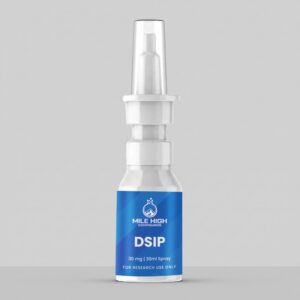
DSIP Spray refers to a nasal formulation marketed around delta sleep-inducing peptide (DSIP), a short peptide investigated for its possible role in sleep regulation. DSIP has attracted research interest because of its proposed connection to sleep patterns, stress responses, and neuroendocrine activity. However, its effects in humans remain uncertain, and evidence for a nasal spray specifically is especially limited.
For anyone researching DSIP Spray, it is important to distinguish scientific investigation from proven treatment. DSIP is not an FDA-approved medication for insomnia or other sleep disorders, and online product claims should not be treated as established medical facts.
1. What Is DSIP Spray?
DSIP stands for delta sleep-inducing peptide, also known as emideltide. It is a small peptide made up of nine amino acids. Researchers first investigated it in connection with sleep-related biological processes, leading to its widely used name.
DSIP Spray describes a nasal delivery format rather than a separate peptide. The formulation may be advertised as a convenient way to administer DSIP, but the existence of a spray product does not demonstrate that it is effective, reliably absorbed, or equivalent to preparations used in earlier studies.
The composition, concentration, stability, purity, and delivery characteristics of a product can vary. These details matter when evaluating any research compound.
2. Why Is DSIP Studied in Sleep Research?
DSIP has been studied for a possible relationship with sleep physiology. Early research explored whether it could influence sleep patterns and related biological responses. Some small historical human studies reported changes in sleep measures, while other findings suggested limited or inconsistent effects.
The overall evidence remains weak by modern clinical standards. The proposed role of DSIP in natural sleep regulation has not been reliably established, and its precise biological mechanism remains unclear.
DSIP should therefore be described as an investigational peptide associated with sleep research, not as a proven solution for poor sleep or insomnia.
3. What Does Research Say About DSIP Spray Benefits?
DSIP is sometimes marketed with claims involving sleep quality, relaxation, stress support, or recovery. These claims require careful interpretation.
Research on DSIP itself has included small, older human studies, many of which used routes other than nasal administration. Findings from an injectable or intravenous preparation cannot automatically be applied to a nasal spray. The delivery route can affect absorption and exposure, and those differences need to be studied directly.
At present, there is not enough reliable clinical evidence to conclude that DSIP Spray improves sleep onset, increases restorative sleep, reduces anxiety, or enhances recovery. These remain unproven claims rather than established benefits.
4. How Does Nasal Delivery Differ From Other Routes?
A nasal spray is designed to deliver a substance through the lining of the nose. Nasal delivery can be useful for certain medicines, but its performance depends on the specific compound and formulation.
For DSIP Spray, important unanswered questions include how much of the peptide is absorbed, how consistently it reaches the bloodstream, how stable it remains in the formulation, and whether nasal delivery produces meaningful clinical effects.
Evidence involving another route does not establish the safety or effectiveness of a nasal formulation. Reliable product assessment would require appropriate formulation testing, quality controls, and well-designed human studies.
5. DSIP Spray Safety and Quality Considerations
Safety is a central consideration when researching unapproved peptides. Modern, high-quality safety data for DSIP are limited, including information about long-term effects, interactions with medicines, and risks associated with different formulations.
Potential concerns with inadequately characterized peptide products can include incorrect concentration, contamination, impurities, degradation, and uncertainty about the ingredients. Nasal products also raise formulation-specific questions, including local irritation and the suitability of ingredients for intranasal use.
Consumers should not assume that a product is safe simply because it is described as a peptide, research compound, or nasal spray. Anyone experiencing persistent sleep problems should speak with a qualified healthcare professional rather than relying on an unapproved product.
6. Is DSIP Spray FDA Approved?
DSIP is not an FDA-approved drug for treating insomnia, stress, or other medical conditions. In 2026, the FDA evaluated emideltide-related substances in the context of its pharmacy-compounding process. That review is distinct from approval of a finished drug product.
A product being offered online does not mean it has undergone FDA review for safety, effectiveness, manufacturing quality, or a specific medical use. Regulatory requirements also differ by country, so local rules should be checked before making claims about availability or legal status.
For website owners, it is best to avoid presenting DSIP Spray as an approved sleep medicine or promising specific clinical outcomes.
7. What Should Readers Know Before Researching DSIP Spray?
A responsible review of DSIP Spray should focus on the identity of the compound, the quality of available evidence, formulation transparency, and regulatory status.
Useful questions include whether the product has independently verified identity and purity, whether its ingredients are clearly disclosed, and whether any claims are supported by studies of the same nasal formulation. Research findings should be evaluated for study size, design, route of administration, and reproducibility.
Most importantly, interest in a compound is not proof that it works. DSIP remains an investigational peptide, and more rigorous research is needed before firm conclusions can be made about nasal delivery, sleep outcomes, or long-term safety.
Frequently Asked Questions About DSIP Spray
What does DSIP stand for?
DSIP stands for delta sleep-inducing peptide. It is also known as emideltide.
Is DSIP Spray proven to improve sleep?
No. Existing research is limited and inconsistent, and reliable clinical evidence establishing that a nasal DSIP spray improves sleep is lacking.
Is DSIP Spray FDA approved?
No. DSIP is not FDA approved as a treatment for insomnia or another medical condition.
Is a nasal spray the same as injectable DSIP?
No. Different delivery routes can produce different absorption and exposure. Evidence from one formulation cannot automatically establish the performance of another.
Is DSIP Spray safe for long-term use?
Long-term safety has not been adequately established. Product quality, formulation, possible interactions, and individual health factors remain important concerns.
Conclusion
DSIP Spray is associated with research into delta sleep-inducing peptide and its proposed relationship with sleep physiology. However, current evidence does not establish that nasal DSIP is an effective or safe treatment for sleep disorders. Questions about absorption, formulation quality, clinical benefits, and long-term safety remain unresolved.
For educational and research-focused content, DSIP Spray should be presented with transparent evidence limitations and without unsupported medical promises. Anyone dealing with ongoing sleep difficulties should seek advice from a qualified healthcare professional.
Disclaimer: This article is for educational purposes only and is not medical advice. DSIP is not an FDA-approved treatment for insomnia or other medical conditions. Do not use investigational compounds as substitutes for professional diagnosis or treatment.


Reviews
There are no reviews yet.