
DSIP: 7 Essential Facts About Sleep Research and Safety
DSIP, short for Delta Sleep-Inducing Peptide, is an experimental peptide investigated for its possible role in sleep regulation, stress responses, and neurological processes. Also known as emideltide, DSIP has attracted research interest because early studies suggested that it might influence sleep patterns and sleep quality.
Despite its name and historical research, this is not an established treatment for insomnia. The available clinical evidence is limited, and questions remain about its biological mechanism, long-term safety, and effectiveness.
At Mile High Compounds, our goal is to provide educational information about research compounds, scientific findings, regulatory status, and safety considerations.
1. What Is DSIP?
This is a short peptide consisting of nine amino acids, making it a nonapeptide. It was originally investigated for its potential relationship with delta-wave sleep, a stage associated with deep non-rapid eye movement (NREM) sleep.
Researchers initially explored whether it might act as a naturally occurring signal involved in regulating sleep. Subsequent research examined its possible effects on sleep patterns, stress responses, and other physiological processes.
However, the precise biological role of it remains uncertain. Its name reflects the original research interest rather than proof that the peptide consistently induces deep sleep in humans.
This is also distinct from other peptides marketed for sleep or recovery. Findings from studies of different compounds should not automatically be applied to it. <Cite refs={[“turn728514search3″,”turn728514search14”]}/>
2. How Does DSIP Work?
The mechanism of this has not been fully established. Researchers have proposed that it may influence neurochemical signaling and processes associated with sleep-wake regulation, but there is no universally accepted explanation for its reported effects.
Early experiments investigated changes in sleep architecture, including sleep duration, sleep onset, and the distribution of different sleep stages. Some studies reported changes following The administration, while others found weak or inconsistent effects.
These observations do not establish a specific receptor mechanism or prove that the reliably improves sleep. The relationship between a peptide’s proposed biological activity and meaningful improvements in sleep quality requires careful clinical testing.
Understanding this uncertainty is important when evaluating claims that it can regulate circadian rhythms, improve recovery, or consistently promote restorative sleep. <Cite refs={[“turn728514search3″,”turn728514search12”]}/>
3. DSIP and Sleep Quality Research
Sleep has been the primary focus of it research. Early human studies examined people experiencing disturbed sleep and chronic insomnia, using measures such as sleep duration, sleep efficiency, and sleep onset.
Some small studies reported potentially favorable changes. However, these findings were not consistent across all measurements or investigations.
In a double-blind study involving 16 people with chronic insomnia, researchers observed some improvements in objective sleep measurements. The effects were weak, and other outcomes, including subjective sleep quality, did not show corresponding improvements. The authors concluded that short-term DSIP treatment was unlikely to provide substantial therapeutic benefit. <Cite refs={[“turn728514search0”]}/>
These results illustrate why early positive observations should not be interpreted as proof of an effective sleep treatment. Small sample sizes, short observation periods, and differences in study design limit the conclusions that can be drawn.
4. What Does Clinical Evidence Show?
This has been examined in human studies, primarily conducted several decades ago. Some early investigations reported improvements in sleep-related measurements, while others produced less convincing results.
For example, a small 1984 open-label study involving seven patients reported improvements in insomnia following it treatment. Because the study lacked a control group, it could not reliably separate treatment effects from other influences, including natural changes in symptoms and expectations. <Cite refs={[“turn728514search1”]}/>
Other investigations used placebo-controlled designs, but the overall evidence remains limited and inconsistent. The historical research does not provide the kind of robust, replicated evidence needed to establish it as a standard treatment for sleep disorders.
There is also insufficient modern clinical evidence to establish its effectiveness for anxiety, chronic stress, cognitive enhancement, or general recovery. Claims about these applications should be treated as experimental rather than proven benefits.
5. Is DSIP FDA Approved?
DSIP is not FDA-approved for the treatment of insomnia or any other medical condition in the United States. It should not be confused with approved prescription treatments for sleep disorders, which have undergone regulatory evaluation for specific uses.
Research interest and historical human studies do not establish regulatory approval. In July 2026, an FDA advisory committee considered whether certain DSIP-related bulk substances should be included on the list permitting their use in specified pharmacy-compounding circumstances. The committee did not recommend their inclusion. This advisory outcome is distinct from a final FDA determination. <Cite refs={[“turn728514search9″,”turn728514search15”]}/>
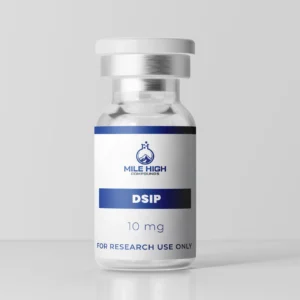
Products sold online as DSIP or emideltide may be labeled for research purposes. Such labeling does not demonstrate that a product is approved, sterile, accurately characterized, or appropriate for human use.
Regulatory status can vary by jurisdiction and change over time, so authoritative local guidance should be checked before drawing conclusions about a specific product.
6. DSIP Safety and Potential Risks
The safety profile of it has not been adequately established for long-term or routine use. Older, small studies cannot reliably identify uncommon adverse effects, interactions, or risks associated with repeated exposure.
Additional uncertainty arises when a product comes from an unverified supplier. Incorrect peptide identity, contamination, impurities, and inconsistent concentrations may introduce risks that are not reflected in historical clinical studies.
There is also limited information about pharmacokinetics, long-term effects, and the safety of different formulations and administration routes. Findings from one preparation or research setting cannot automatically establish the safety of another.
People experiencing persistent insomnia or other sleep difficulties should consult a qualified healthcare professional. this should not replace evidence-based assessment or approved treatment, and research-labeled products should not be assumed suitable for self-treatment.
7. How to Evaluate DSIP Research Information
When reviewing information about it, focus on the quality of the evidence rather than promotional claims. Consider these questions:
- Does the source distinguish human studies from animal experiments?
- Are the findings based on controlled trials or uncontrolled observations?
- Does the article acknowledge that the research is largely historical?
- Are safety uncertainties and regulatory status clearly explained?
- Does the source avoid promising guaranteed sleep, recovery, or stress relief?
These questions help readers distinguish scientific investigation from unsupported marketing. A proposed mechanism or positive result from a small study does not establish a reliable treatment effect.
For research organizations, accurate compound identification and appropriate laboratory procedures are essential. For readers, the central issue is understanding that DSIP remains experimental, with substantial uncertainty around effectiveness and safety.
Frequently Asked Questions
What is DSIP?
this, or Delta Sleep-Inducing Peptide, is a nine-amino-acid peptide investigated for possible effects on sleep regulation and related physiological processes.
Does DSIP improve sleep?
Some small historical studies reported changes in sleep measurements, but findings have been inconsistent. Reliable clinical benefit has not been established.
Is DSIP the same as emideltide?
Emideltide is another name used for it. Product identity and formulation should still be verified rather than assumed from a label.
Is DSIP FDA-approved?
No. This is not FDA-approved for insomnia or another medical condition in the United States.
Is DSIP safe for long-term use?
Long-term safety has not been adequately established. The quality of commercially available research products may introduce additional uncertainty.
Conclusion
This is an experimental peptide originally investigated for its possible relationship with sleep regulation. Although some historical human studies reported favorable sleep-related findings, other results were weak or inconsistent, and the available evidence does not establish DSIP as an effective, approved treatment for insomnia.
Understanding its research history, scientific limitations, and unresolved safety questions is essential when evaluating claims about DSIP. Responsible research requires accurate documentation and a clear distinction between preliminary findings and established clinical benefits.
Educational disclaimer: This article is for informational and educational purposes only. It is not medical advice and does not recommend using research compounds to diagnose, treat, cure, or prevent any disease. Consult a qualified healthcare professional for medical decisions.


Reviews
There are no reviews yet.