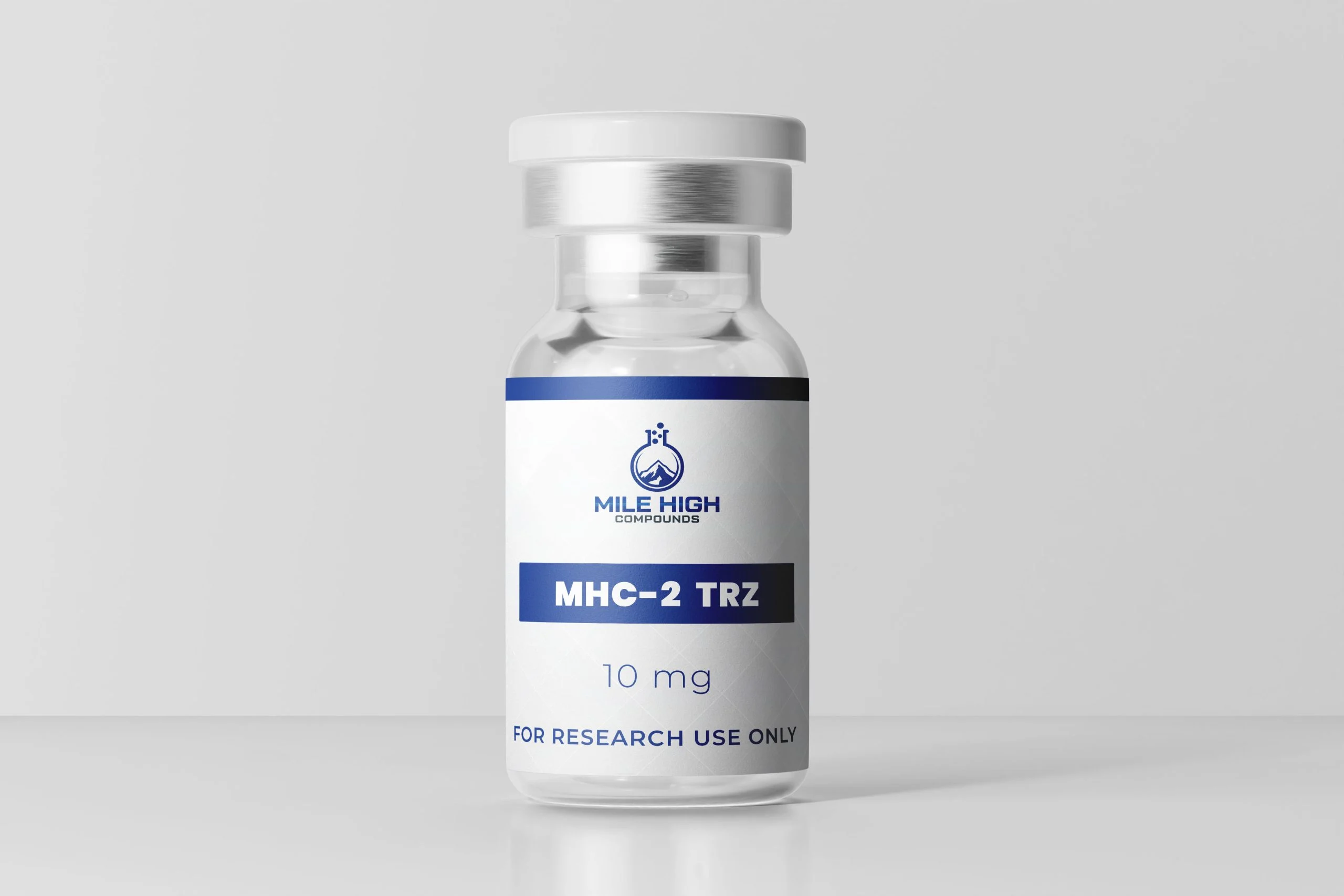
MHC-2 TRZ: 7 Essential Facts About Tirzepatide Research and Safety
MHC-2 TRZ is a vendor code name associated with tirzepatide, a synthetic peptide-based medicine that activates two hormone receptors involved in metabolic regulation: glucose-dependent insulinotropic polypeptide (GIP) and glucagon-like peptide-1 (GLP-1). Tirzepatide has been studied for its effects on blood glucose, appetite, and body weight.
Mile High Compounds — Your source for research compounds, peptide information, and science-driven insights — presents this educational overview to explain the identity of MHC-2 TRZ, the science behind tirzepatide, its established medical uses, and important safety considerations. A vendor code does not independently verify a product’s identity, purity, or regulatory status.
1. What Is MHC-2 TRZ?
MHC-2 TRZ is a product code used in some online research-compound listings to refer to tirzepatide. It is not a separate, scientifically established active ingredient. The code should therefore be distinguished from the generic drug name and from the branded prescription medicines that contain tirzepatide.
In the United States, tirzepatide is the active ingredient in Mounjaro, approved to improve blood glucose control in adults with type 2 diabetes, and Zepbound, approved for specified indications including chronic weight management in eligible adults. <Cite refs={[“turn199721search0″,”turn199721search3”]}/>
These approvals apply to the relevant prescription products and labeled indications. They do not automatically apply to products sold under an alternative code name or as research materials.
2. How Does Tirzepatide Work?
Tirzepatide activates both GIP and GLP-1 receptors. These receptors participate in hormonal signaling associated with glucose regulation and appetite.
The medicine helps regulate insulin secretion in response to elevated blood glucose. It also influences processes involved in appetite and food intake and slows gastric emptying. Together, these effects contribute to its clinical applications in type 2 diabetes and chronic weight management.
Although the GIP and GLP-1 pathways are well established areas of metabolic research, individual responses to treatment can vary. The medicine’s effects and risks depend on the patient’s health, the indication, and the prescribed product.
The established pharmacology of tirzepatide should not be interpreted as evidence that every product labeled MHC-2 TRZ has the same composition or clinical performance. <Cite refs={[“turn199721search24″,”turn199721search3”]}/>
3. MHC-2 TRZ and Blood Glucose Research
Tirzepatide has been clinically studied for managing blood glucose in adults with type 2 diabetes. Mounjaro is FDA-approved for improving glycemic control alongside diet and exercise.
Clinical research evaluates outcomes such as glycated hemoglobin (HbA1c), which reflects average blood glucose over approximately two to three months. These measurements help clinicians assess how well a treatment supports diabetes management.
However, tirzepatide is not appropriate for every person with elevated blood glucose, and it is not indicated for type 1 diabetes. Its prescription use requires consideration of medical history, other medicines, and potential adverse effects.
Evidence from approved tirzepatide medicines cannot be used to certify the quality or effectiveness of an unapproved product sold under the code MHC-2 TRZ. <Cite refs={[“turn199721search27″,”turn199721search6”]}/>
4. Tirzepatide and Weight Management
Tirzepatide is also used in a specific prescription medicine for chronic weight management. Zepbound is approved for eligible adults with obesity, or adults with overweight and at least one weight-related medical condition, alongside a reduced-calorie diet and increased physical activity. Its approved indications also include treatment of moderate-to-severe obstructive sleep apnea in adults with obesity. <Cite refs={[“turn199721search0″,”turn199721search25”]}/>
Clinical trials have reported reductions in body weight in eligible participants. Nevertheless, outcomes vary, and treatment decisions require an assessment of benefits, contraindications, and potential risks.
MHC-2 TRZ should not be promoted as a separate proven weight-loss compound. The evidence relates to tirzepatide in appropriately studied and authorized formulations, not to an unverified product code.
5. MHC-2 TRZ Safety Considerations
Tirzepatide can cause adverse effects, and its prescribing information includes important warnings. Commonly reported gastrointestinal effects include nausea, diarrhea, vomiting, constipation, and abdominal discomfort.
Other important risks and precautions include:
- Thyroid C-cell tumor warning: Relevant prescription labeling includes a boxed warning based on findings in rats. Human relevance remains unknown.
- Contraindications: Prescription Zepbound is contraindicated in people with a personal or family history of medullary thyroid carcinoma or multiple endocrine neoplasia syndrome type 2.
- Pancreatitis and gallbladder disease: These are important potential complications addressed in prescribing information.
- Dehydration and kidney problems: Severe gastrointestinal symptoms can contribute to dehydration and acute kidney injury.
- Hypoglycemia: Risk may increase when tirzepatide is used with certain other diabetes medicines.
- Delayed gastric emptying: This may affect some oral medicines and is relevant to procedures involving anesthesia or deep sedation.
These warnings are not a complete list. Medical professionals should review the current prescribing information and a patient’s individual circumstances before prescribing treatment. <Cite refs={[“turn199721search24″,”turn199721search6”]}/>
6. MHC-2 TRZ Product Identity and Quality
Because MHC-2 TRZ is a vendor code rather than an official generic drug name, product verification is especially important when evaluating online listings.
A product description, vial label, or certificate of analysis should not be treated as conclusive proof that the contents are identical to an approved prescription medicine. Quality assessment may require appropriate analytical methods, reliable laboratory documentation, and traceability to the specific batch.
A certificate of analysis is only as useful as its methods, results, sample provenance, and verification. Even a credible analytical result does not establish that an unapproved product is safe or effective for human use.
Readers should distinguish between FDA-approved prescription medicines and products sold for laboratory research. A research-only label does not establish authorization for human administration.
7. The Future of Tirzepatide Research
Research into tirzepatide continues to examine its role in metabolic disease, weight management, and other medically relevant outcomes. Future studies may further clarify long-term benefits, risks, and how clinicians can identify appropriate patients for treatment.
However, findings must be interpreted according to the formulation studied, the population enrolled, and the specific outcome measured. Results from a clinical trial of an approved medicine cannot automatically validate products from unrelated manufacturers or products marketed under coded names.
For responsible research communication, MHC-2 TRZ should be identified transparently as a vendor code associated with tirzepatide, while claims about safety and effectiveness should remain grounded in evidence for the actual product being discussed.
Frequently Asked Questions About MHC-2 TRZ
What does MHC-2 TRZ stand for?
Online vendor listings use MHC-2 TRZ as a code name for tirzepatide. The code is not a separate recognized active ingredient and does not verify a product’s contents.
Is MHC-2 TRZ the same as tirzepatide?
It is marketed under that code as tirzepatide, but the name alone cannot confirm the identity, purity, or quality of a particular product.
Is tirzepatide FDA-approved?
Yes. Mounjaro and Zepbound are FDA-approved prescription medicines containing tirzepatide for specific indications. Approval does not extend automatically to products sold under research codes.
Is MHC-2 TRZ an FDA-approved product?
The code name itself is not an FDA-approved medicine. Regulatory status must be assessed for the specific product, formulation, and intended use.
What are the main safety concerns with tirzepatide?
Important concerns include gastrointestinal adverse effects, gallbladder problems, pancreatitis warnings, dehydration-related kidney injury, hypoglycemia with certain combinations, and the boxed warning concerning thyroid C-cell tumors in rodents.
Conclusion
MHC-2 TRZ is a vendor code associated with tirzepatide, a dual GIP and GLP-1 receptor agonist with established prescription uses. The scientific evidence supporting tirzepatide should be distinguished from the unverified identity or quality of any product marketed under a code name.
Mile High Compounds encourages transparent compound identification, accurate regulatory information, and responsible communication about pharmaceutical research.
Educational disclaimer: This article is for informational purposes only and is not medical advice. Tirzepatide should be used only as prescribed through appropriate medical care. This article does not recommend using research-grade products or unapproved formulations in humans.


Reviews
There are no reviews yet.