
PE-22-28: 7 Essential Facts About Brain Research and Safety
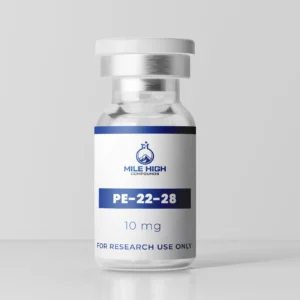
PE-22-28 is an experimental synthetic peptide investigated for its potential effects on neurological signaling and depression-related behavior in animal models. Also known as mini-spadin, it was developed as a shorter analogue of spadin, a peptide associated with the TREK-1 potassium channel.
Interest in it comes from early research into how this channel may influence neuronal activity and mood-related pathways. However, promising laboratory findings do not establish that a compound can treat depression, improve cognition, or provide benefits in humans.
This guide from Mile High Compounds reviews seven essential facts about PE-22-28, its proposed mechanism, the scientific evidence, and important safety limitations.
1. What Is PE-22-28?
This commonly described in peptide research discussions as a synthetic seven-amino-acid peptide derived from a region of the sortilin propeptide. It is also referred to as mini-spadin because of its relationship to the longer peptide spadin.
Researchers developed it to investigate whether a shorter peptide could retain relevant biological activity while potentially offering different stability characteristics.
It is important to distinguish it from other experimental peptides with similar names. Product descriptions can be inconsistent, so researchers and consumers should verify a compound’s identity rather than relying exclusively on its label.
This remains an experimental research compound. Its scientific history does not establish that commercial products are suitable for human use.
2. Why Is PE-22-28 Studied?
The primary scientific interest in it concerns its interaction with TREK-1, a potassium channel involved in regulating the electrical activity of cells. TREK-1 belongs to a family of channels that help control how neurons respond to different stimuli.
Researchers have investigated whether blocking this channel can influence neuronal signaling and behaviors associated with depression in animal models.
This mechanism is of interest because understanding how ion channels affect brain activity may help researchers explore new approaches to neurological drug development.
However, identifying a possible biological target is only an early stage of research. A compound may affect a channel in laboratory conditions without producing a useful, predictable, or safe therapeutic effect in humans.
3. What Does the Research Say About Depression?
Early studies reported antidepressant-like behavioral effects of it in mice. Researchers examined outcomes in established animal behavioral tests and investigated biological changes associated with neuronal function.
These findings helped establish a scientific rationale for further investigation. Nevertheless, behavioral tests in animals cannot diagnose depression or reliably predict whether a compound will relieve depressive symptoms in people.
The evidence base for this is particularly limited. Available research summaries identify a small number of preclinical publications, with much of the foundational work coming from the same research group.
No published human clinical evidence establishes it as an effective treatment for depression. It should not be presented as a replacement for evidence-based mental healthcare or prescribed medication.
4. What Is TREK-1 and Why Does It Matter?
TREK-1 is a two-pore-domain potassium channel encoded by the KCNK2 gene. It contributes to the regulation of electrical activity in certain cells, including neurons.
The channel has attracted research interest because its activity may influence neuronal excitability and other biological processes relevant to the nervous system.
This was investigated as an inhibitor of TREK-1. Early laboratory findings suggested that it could interact with the channel at very low concentrations under specific experimental conditions.
However, the precise relationship between TREK-1 inhibition and potential antidepressant effects remains a research question. The channel is also present outside the brain, which means that its inhibition could have effects beyond the intended neurological pathway.
5. Has PE-22-28 Been Tested in Humans?
No published human clinical study establishing the safety or effectiveness of this has been identified in the research sources reviewed for this article. Registered clinical trials of it have also not been identified in the cited research summaries.
Consequently, there is no established clinical evidence showing that the peptide improves mood, treats depression, enhances memory, or produces other neurological benefits in humans.
Researchers would need to establish basic pharmacokinetic information, including how the compound is absorbed, distributed, and broken down in the body. Carefully designed clinical trials would then be needed to evaluate safety and potential effectiveness.
Animal findings cannot establish a safe human dose, and experimental administration methods cannot be assumed to work the same way in people.
6. What Are the Safety and Regulatory Considerations?
The safety profile of this is not adequately established. There is insufficient human evidence to characterize its adverse effects, long-term risks, interactions with medication, or effects across different populations.
Because TREK-1 participates in biological processes outside the brain, researchers must also investigate whether inhibiting this channel affects other tissues or physiological functions.
Commercial availability does not demonstrate that a product has undergone appropriate clinical testing, manufacturing controls, or regulatory review. Product labels alone cannot verify identity, purity, concentration, or suitability for human use.
This is not an FDA-approved treatment for depression or any other medical condition. It should not be used as a substitute for professional medical care. Anyone experiencing depression or other mental health symptoms should consult a qualified healthcare professional about established treatment options.
7. What Could Future PE-22-28 Research Reveal?
Future research would need to reproduce the initial findings independently and clarify the relationship between TREK-1 activity and the observed behavioral effects.
Other priorities include evaluating the compound’s stability, pharmacokinetics, potential toxicity, effects on other biological targets, and possible consequences of repeated exposure.
If the preclinical findings eventually justify human research, clinical trials would need to determine whether PE-22-28 produces meaningful benefits and whether those benefits outweigh its risks.
Until these steps are completed, the peptide remains a subject of early-stage scientific investigation rather than an established neurological treatment.
Frequently Asked Questions About PE-22-28
What is PE-22-28 peptide?
It is, also known as mini-spadin, is a synthetic peptide investigated for its interaction with the TREK-1 potassium channel and its effects in animal research models.
Is PE-22-28 the same as spadin?
No. This is a shorter analogue associated with spadin research, but the two are distinct molecules and should not be treated as interchangeable.
Can PE-22-28 treat depression?
Its potential antidepressant effects have been investigated in animal models, but human effectiveness has not been established. It is not an approved depression treatment.
Has PE-22-28 been studied in humans?
No published human clinical evidence establishing its safety or effectiveness was identified in the sources reviewed for this article.
Is PE-22-28 FDA-approved?
No. PE-22-28 is not an FDA-approved treatment for depression, cognitive enhancement, or another medical condition.
Is PE-22-28 safe?
Its safety in humans is unknown. Adequate clinical evidence is lacking, including information about long-term effects and potential adverse reactions.
Conclusion
PE-22-28 is an experimental peptide that has attracted scientific interest because of its interaction with the TREK-1 potassium channel and preliminary findings in animal research. However, early laboratory results do not demonstrate that it can safely or effectively treat depression or improve brain function in humans.
Mile High Compounds encourages readers to distinguish preclinical research from established medical evidence and to approach claims about experimental peptides with caution.
Educational disclaimer: This article is for informational and educational purposes only. It is not medical advice and does not establish the safety or effectiveness of PE-22-28 for human use.


Reviews
There are no reviews yet.