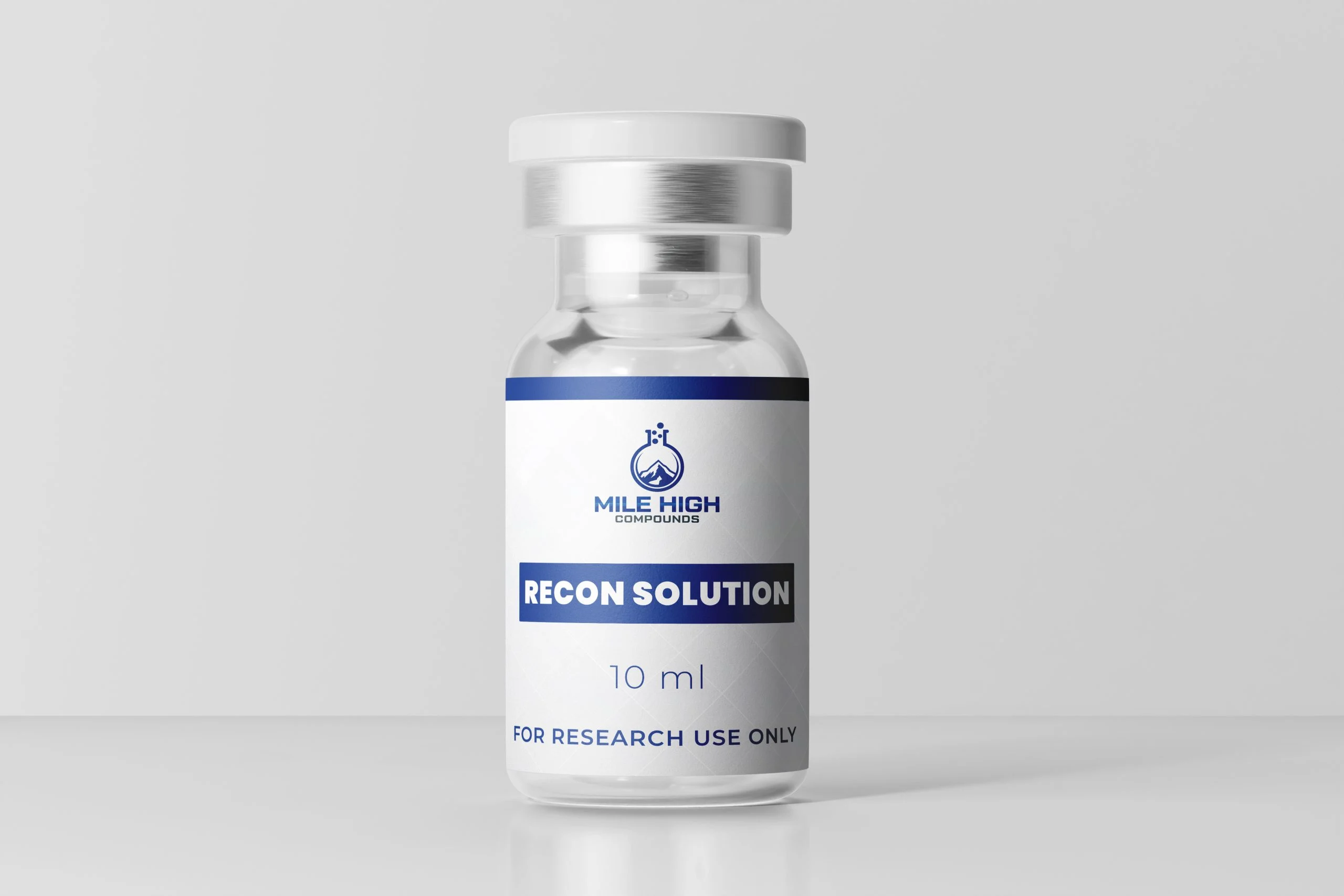
Reconstitution Solution: 7 Essential Facts About Formulation and Safety
Reconstitution Solution is a liquid used to dissolve or dilute certain substances before their intended use. In pharmaceutical and laboratory settings, the appropriate solution depends on the product being prepared, its ingredients, and the manufacturer’s instructions. Although the term is frequently associated with peptide research, reconstitution solutions can have different compositions and purposes.
Mile High Compounds — Your source for research compounds, peptide information, and science-driven insights — provides this educational overview of reconstitution solutions, common formulation types, quality considerations, and essential safety information.
1. What Is Reconstitution Solution?
Reconstitution Solution refers broadly to a liquid used to dissolve a dry substance or prepare a product for its intended application. Some pharmaceutical products are supplied as powders because this formulation can support stability during storage. A suitable liquid may be specified for preparing the product before use.
The term does not identify a single standardized formulation. Depending on the application, a solution may contain sterile water, sodium chloride, a preservative, a buffer, or other ingredients.
In pharmaceutical applications, selecting a compatible diluent is important because the liquid can affect the product’s stability, concentration, compatibility, and suitability for its intended route of administration.
For this reason, a product described simply as a reconstitution solution should have clearly documented ingredients, intended use, and quality specifications.
2. Common Types of Reconstitution Solution
Different solutions serve different purposes, and their names should not be treated as interchangeable.
Sterile Water for Injection is a sterile, nonpyrogenic preparation without an added antimicrobial preservative or buffer. It is supplied in single-dose containers for use as a diluent or solvent for appropriate injectable medicines. It may require the addition of suitable solutes before administration, according to the medicine’s instructions. <Cite refs={[“turn536442search8”]}/>
Bacteriostatic Water for Injection contains sterile water and benzyl alcohol as a preservative. Certain formulations are supplied in multiple-dose containers and are intended for dissolving or diluting compatible injectable medicines as directed by their labeling. It has specific warnings and is not suitable for every patient or application. <Cite refs={[“turn536442search0″,”turn536442search3”]}/>
Sodium chloride solutions contain salt in water and may be used for particular pharmaceutical applications. Their suitability depends on the product being prepared and whether a preservative is present.
Other specialized diluents may contain buffers or additional ingredients. The correct choice depends on the specific product rather than a general assumption that one solution works for all compounds.
3. Why Is Reconstitution Solution Used?
Reconstitution solutions can help prepare products that are supplied in a dry or concentrated form. In pharmaceutical manufacturing and clinical care, an appropriate diluent can support the preparation of a usable formulation when the product’s instructions require it.
The intended purpose may include dissolving a compatible substance, diluting a concentrated preparation, or creating a formulation with specified physical and chemical properties.
However, a solution that dissolves one substance successfully may be unsuitable for another. Compatibility depends on factors such as chemical composition, acidity, ionic strength, preservatives, and the stability of the substance being prepared.
Successful dissolution alone does not establish that a preparation is sterile, stable, safe, or appropriate for administration. Those characteristics require suitable manufacturing controls, testing, and product-specific instructions.
4. Reconstitution Solution and Peptide Research
Peptides are short chains of amino acids that may be investigated in laboratory, pharmaceutical, or biological research. Some peptide products are supplied in dried form, making the choice of a compatible preparation liquid an important formulation consideration.
Peptide stability can be influenced by environmental conditions, including temperature, pH, oxidation, and interactions with other ingredients. Different peptides can have different solubility characteristics, so a universal reconstitution formula is not scientifically justified.
For research materials, documentation should identify the substance, its formulation, the intended application, and the relevant handling requirements.
Research-grade status does not establish suitability for human use. Likewise, a solution marketed for research purposes should not automatically be assumed to meet the sterility, endotoxin, or quality standards required for injectable medicines.
5. Reconstitution Solution: Quality and Safety Considerations
Quality is particularly important when a solution is intended for pharmaceutical use. The appearance of a liquid alone cannot establish its chemical identity, sterility, or freedom from harmful contaminants.
Important quality considerations include:
- Ingredient transparency: The formulation should identify its ingredients and relevant concentrations.
- Sterility assurance: Products intended for injectable use require appropriate manufacturing and quality controls.
- Container integrity: Damaged packaging or a compromised seal can raise contamination concerns.
- Compatibility: The solution must be appropriate for the specific substance and intended use.
- Storage information: Conditions and expiry dates should be clearly documented.
- Traceability: Reliable lot identification and manufacturing records help support quality assessment.
The FDA’s pharmaceutical guidance highlights the importance of sterility, dose uniformity, and stability testing for applicable products, including products that are reconstituted. <Cite refs={[“turn536442search11”]}/>
Consumers and researchers should not infer product quality from clear appearance, professional-looking packaging, or marketing statements alone.
6. Reconstitution Solution and Regulatory Status
A product’s regulatory status depends on its ingredients, intended use, manufacturing process, and the jurisdiction where it is marketed.
Sterile water and bacteriostatic water products have specific pharmaceutical labeling and intended-use restrictions. Those labeling requirements do not automatically apply to every product advertised online as a reconstitution solution.
Similarly, a product sold for laboratory research is not automatically approved for clinical use. Marketing terminology does not replace regulatory authorization or establish that a formulation meets the standards required for a particular medical application.
When evaluating a product, readers should distinguish among pharmaceutical-grade materials, laboratory reagents, and products marketed for research purposes. Each category can have different quality requirements and limitations.
7. How to Evaluate a Reconstitution Solution Product
When researching a reconstitution solution, clear documentation is more useful than broad claims about purity or versatility.
Consider whether the product information identifies its composition, intended use, storage requirements, manufacturer, lot number, and expiry date. For products represented as sterile, relevant quality documentation should support that claim.
A certificate of analysis may provide additional information, but its usefulness depends on the testing performed, the laboratory’s reliability, and whether the document corresponds to the specific product lot.
It is also important to avoid assuming that a solution is compatible with every peptide, medication, or laboratory substance. Product-specific instructions and appropriate professional guidance should determine suitability.
Responsible product descriptions explain what a solution contains and what it is designed for, while avoiding unsupported promises about safety or universal compatibility.
Frequently Asked Questions About Reconstitution Solution
What is Reconstitution Solution used for?
It is a general term for a liquid used to dissolve or dilute a substance when required by its formulation and instructions.
Is Reconstitution Solution the same as bacteriostatic water?
Not necessarily. Bacteriostatic water is a specific type of sterile water containing an antimicrobial preservative. Other reconstitution solutions can have different ingredients and intended uses.
Is sterile water the same as bacteriostatic water?
No. Sterile Water for Injection contains no added antimicrobial preservative, while Bacteriostatic Water for Injection contains benzyl alcohol in labeled formulations. Their appropriate uses differ. <Cite refs={[“turn536442search0″,”turn536442search8”]}/>
Can one reconstitution solution be used for every peptide?
No. Compatibility depends on the peptide, formulation, intended application, and manufacturer’s instructions.
Does a clear solution mean it is safe?
No. Clarity cannot establish sterility, chemical identity, purity, or suitability for human use.
Conclusion
Reconstitution Solution is a broad term covering liquids with different compositions and purposes. Understanding the distinction between sterile water, bacteriostatic water, saline, and specialized diluents helps prevent inaccurate product descriptions and assumptions about compatibility.
Mile High Compounds encourages transparent ingredient information, responsible research communication, and careful attention to product-specific quality and safety requirements.
Educational disclaimer: This article is for informational purposes only and is not medical advice. Reconstitution solutions should be used only for their documented intended purposes and according to the relevant product instructions. This content does not provide instructions for preparing or administering injectable products.


Reviews
There are no reviews yet.