
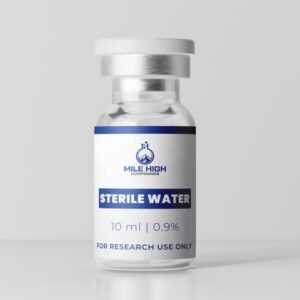
Sterile Water: 7 Important Facts About Types, Uses, and Safety
Sterile water is water that has been processed to meet defined sterility requirements. It is used in healthcare, pharmaceutical manufacturing, laboratories, and other settings where microbial contamination must be controlled. However, not all sterile water products are interchangeable, and their intended uses depend on their formulation, packaging, and labeling.
When researching Sterile Water, it is important to distinguish sterile water for irrigation, sterile water for inhalation, and for Injection. Each product is designed for specific purposes, and choosing the wrong type can create serious safety risks.
1. What Is Sterile Water?
This is water that has undergone a validated process intended to eliminate viable microorganisms. It is packaged to maintain sterility until the container is opened or compromised.
Unlike ordinary drinking water, sterile water is manufactured for specific technical or medical applications. Its quality requirements depend on the product category and applicable standards.
Sterility does not necessarily mean that water is free of every chemical impurity, nor does it mean the product is suitable for every route of administration. The label is essential for understanding what the product is designed to do.
2. Different Types of Sterile Water
Several products contain sterile water, but their intended applications differ.
- Sterile Water for Injection: A sterile, nonpyrogenic preparation intended for use in preparing certain injectable medicines according to their approved instructions. It generally contains no antimicrobial preservative.
- Sterile Water for Irrigation: Intended for specified irrigation procedures. It is not formulated or labeled as an injectable product.
- Sterile Water for Inhalation: Intended for use in suitable inhalation applications, following the product labeling and device instructions.
- Purified or laboratory-grade water: May be used for laboratory or manufacturing purposes, but it should not be assumed to meet the requirements for a particular medical application.
The terms “sterile water” and “bacteriostatic water” are also not synonymous. Bacteriostatic water contains an antimicrobial preservative, while is for Injection generally does not.
3. Common Uses of Sterile Water
It has a range of medical, pharmaceutical, and laboratory uses depending on its labeled category.
In healthcare, specific products may be used for irrigation, selected inhalation procedures, or preparing certain medications. In pharmaceutical manufacturing, water quality is critical to processes that require controlled contamination levels.
Laboratories may also use sterile water in procedures where microbial contamination could affect results. However, the appropriate water specification depends on the test or procedure; sterile water is not automatically suitable for every laboratory application.
Always follow the manufacturer’s instructions and the applicable professional protocol for the specific product.
4. Sterile Water for Injection: Important Considerations
This for Injection is commonly used as a diluent or solvent for certain medications when the medicine’s labeling specifies it. It is not a universal diluent, and compatibility must be confirmed for each medication.
Sterile Water for Injection must not be injected on its own into the bloodstream. Because it is hypotonic, administering it intravenously without an appropriate solute can cause red blood cells to swell and rupture, potentially leading to serious complications.
The correct preparation depends on the specific medicine, its official instructions, and the required clinical setting. Only qualified healthcare professionals should prepare and administer injectable medicines using appropriate sterile technique.
A container labeled for irrigation or inhalation must not be substituted for a product labeled for injection.
5. Sterility, Packaging, and Product Quality
Maintaining sterility depends on proper manufacturing, packaging, storage, and handling. A container may become contaminated if its seal is damaged, it is opened improperly, or the contents are handled in a way that compromises the product.
When evaluating it, check:
- The complete product name and labeled intended use.
- The manufacturer’s identity and product information.
- The integrity of the seal and packaging.
- The expiration date and storage instructions.
- Whether the product contains a preservative or other ingredients.
A clear appearance alone does not prove that a product is sterile or suitable for medical use. Products with damaged packaging, uncertain origins, or unclear labels should not be used for medical procedures.
6. Sterile Water Storage and Handling
It should be stored according to the manufacturer’s instructions. Some products require specific temperature conditions or protection from environmental exposure.
Single-use containers should be handled according to their labeling and discarded after use when directed. Once a container is opened, sterility cannot be assumed indefinitely. Do not rely on appearance or smell to determine whether opened water remains safe.
Avoid transferring it into unverified containers or using equipment that has not been appropriately cleaned or sterilized for the intended procedure. Healthcare and laboratory settings should follow established infection-control and quality procedures.
7. Choosing the Correct Sterile Water Product
The correct product depends on the intended application. Before selecting sterile water, confirm the required specification and intended route of use.
For medication preparation, consult the medicine’s official instructions and use only a diluent specified as compatible. For irrigation or inhalation, choose a product specifically labeled for that application.
Online descriptions can sometimes use broad terms that obscure important differences between products. A responsible product listing should clearly state the exact product category, container size, ingredients where relevant, intended use, storage requirements, and any limitations.
Sterility is only one part of product suitability. Compatibility, formulation, packaging, and the intended use must also be considered.
Frequently Asked Questions About Sterile Water
What is sterile water used for?
Depending on its labeling, sterile water may be used for certain medication-preparation procedures, irrigation, inhalation, and laboratory applications.
Is sterile water the same as distilled water?
No. Distillation describes a purification process, while sterility refers to the absence of viable microorganisms under specified conditions. Distilled water is not necessarily sterile.
Is Sterile Water for Injection the same as bacteriostatic water?
No. Bacteriostatic water contains an antimicrobial preservative, while for Injection generally does not. They have different labeling and use considerations.
Can Sterile Water for Injection be injected by itself?
No. It must not be administered intravenously on its own because its hypotonic nature can cause serious harm, including red blood cell destruction.
Can all sterile water products be used for medication preparation?
No. Only products specified as appropriate for the particular medication and intended route should be used. Irrigation and inhalation products must not be assumed to be suitable for injection.
Conclusion
This is an important product in healthcare, pharmaceutical, and laboratory environments, but different formulations serve different purposes. Sterile Water for Injection, sterile water for irrigation, and this for inhalation are not interchangeable.
Understanding the product label, maintaining package integrity, following storage instructions, and using the correct formulation are essential to safety. For medical applications, always follow the medicine’s official instructions and guidance from a qualified healthcare professional.
Disclaimer: This article is for educational purposes only and is not medical advice. Always use sterile water according to its approved labeling and applicable professional guidance.

Reviews
There are no reviews yet.