
Cardiogen: 7 Essential Facts About Heart Research and Safety
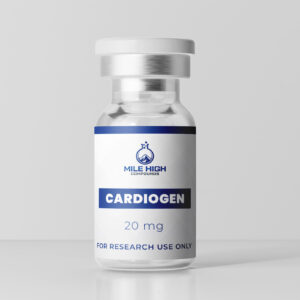
Cardiogen is an experimental short peptide associated with research into cardiac tissue and cellular biology. It belongs to a family of compounds commonly described as short-peptide bioregulators. Researchers have explored whether these peptides influence cellular processes related to tissue function and gene expression.
Despite interest in Cardiogen, its potential role in cardiovascular health remains unproven. Most available evidence comes from preclinical research, and laboratory findings cannot establish that a compound prevents heart disease or improves heart function in humans.
This guide from Mile High Compounds explains what Cardiogen is, what researchers have investigated, and why evidence quality and safety remain important considerations.
1. What Is Cardiogen?
This is commonly described in research summaries as a short peptide with the amino acid sequence alanine-glutamic acid-aspartic acid-arginine, abbreviated AEDR. It is associated with the Khavinson family of peptide bioregulators, a research tradition investigating short peptides and their possible interactions with cellular processes.
However, compound identity matters. Names used in commercial listings and scientific discussions are not always consistent, so the identity and sequence of any material described as it should be verified rather than assumed from the product name alone.
This is not an established cardiovascular medicine. Its proposed biological activity remains investigational, and its name should not be interpreted as evidence that it restores or protects heart function.
2. Why Is Cardiogen Studied in Cardiovascular Research?
The principal research interest in the concerns its possible effects on cardiac tissue at the cellular level. Some laboratory studies have examined tissue samples and cellular markers associated with growth, aging, and programmed cell death.
Researchers investigate these processes because understanding how cells respond to experimental compounds can help generate hypotheses about tissue biology. Such work may identify questions worth investigating in more advanced models.
Nevertheless, a change in a cellular marker is not the same as a demonstrated improvement in cardiovascular health. This has not been established as a treatment for heart failure, coronary artery disease, arrhythmias, or other cardiovascular conditions.
3. What Does the Scientific Evidence Show?
The available literature is limited and predominantly preclinical. Research summaries describe experiments involving cultured cells and isolated heart-tissue samples from animals. These studies can provide preliminary observations about how cells behave under specific laboratory conditions.
For example, research on heart-tissue explants has investigated cell proliferation and the expression of p53, a protein involved in important cellular stress responses and the regulation of cell growth and death.
These findings require careful interpretation. Isolated tissue does not reproduce the complexity of a functioning cardiovascular system, and changes in protein expression do not necessarily translate into improved cardiac performance.
Independent replication and well-designed studies would be necessary before drawing reliable conclusions about it’s biological effects.
4. What Is the Proposed Mechanism of Action?
One hypothesis associated with short-peptide bioregulators is that they may influence gene expression and other cellular regulatory processes. It has been discussed within this framework because of its proposed relationship to cardiac tissue.
However, a proposed mechanism is not necessarily an established mechanism. Evidence that a related peptide affects a particular pathway does not prove that the behaves identically.
Important questions remain about how it interacts with cells, whether it reaches relevant biological targets intact, and whether any observed laboratory effects are reproducible. These questions require direct experimental testing rather than conclusions based on similarities between compounds.
5. Has Cardiogen Been Tested in Humans?
No controlled human clinical evidence establishing it’s safety or effectiveness has been identified in the research summaries reviewed for this article.
This means there is no reliable clinical basis for claiming that can improves heart function, prevents cardiovascular disease, reverses age-related cardiac changes, or extends human lifespan.
Animal experiments and laboratory studies can help researchers decide what to investigate next, but they cannot substitute for clinical trials. Human research would need to assess safety, appropriate clinical outcomes, potential interactions, and whether any benefits outweigh potential risks.
Until adequate evidence becomes available, claims about it’s benefits in people should be regarded as unverified.
6. What Are the Safety and Regulatory Considerations?
A major limitation is the absence of an established human safety profile. Without adequate clinical research, the potential adverse effects, long-term consequences, interactions, and appropriate conditions of use remain uncertain.
Extra caution is warranted when a compound is marketed with claims involving the heart. Cardiovascular conditions can be serious, and relying on an experimental product instead of appropriate medical assessment or proven treatment could delay necessary care.
This should not be assumed safe for injection, oral use, or any other route simply because it is sold as a peptide. Product labels also do not independently verify identity, purity, sterility, or manufacturing quality.
It is not an FDA-approved treatment for cardiovascular disease. Regulatory requirements vary by jurisdiction and product type, so consumers should not interpret commercial availability as evidence of authorization or safety.
7. What Could Future Cardiogen Research Reveal?
Further investigation would need to establish the compound’s identity, reproduce earlier findings independently, and clarify its biological activity in relevant models.
Researchers would also need to determine whether any laboratory observations translate into measurable changes in heart function in living organisms. If preliminary findings justified human testing, appropriately designed clinical trials would then be necessary to evaluate safety and effectiveness.
Until those research steps are completed, It remains an experimental compound rather than an evidence-based cardiovascular intervention.
Frequently Asked Questions About Cardiogen
What is Cardiogen peptide?
This is commonly described as a short peptide associated with experimental research into cardiac tissue and cellular regulation.
What are the potential benefits of Cardiogen?
Potential cardiovascular effects have been proposed from preclinical findings, but benefits in humans have not been established. Claims of improved heart function or prevention of heart disease remain unproven.
Does Cardiogen have human clinical trials?
No controlled human clinical evidence establishing its safety and effectiveness was identified in the sources reviewed for this article.
Is Cardiogen FDA-approved?
This is not an FDA-approved treatment for heart disease. Its regulatory status should be checked against the relevant authority and the specific product.
Is Cardiogen safe to use?
Its safety in humans has not been adequately established. The lack of reliable clinical evidence means that potential risks and long-term effects remain uncertain.
Conclusion
This is an experimental peptide associated with research into cardiac tissue and cellular regulation. Although preliminary laboratory findings have generated scientific interest, they do not establish that the compound improves heart health or treats cardiovascular disease in humans.
For anyone researching experimental peptides, the most responsible approach is to distinguish laboratory observations from clinical evidence, verify compound identity, and avoid treating marketing claims as proven medical facts.
Educational disclaimer: This article is for informational purposes only and is not medical advice. This has not been established as a safe or effective treatment for any human cardiovascular condition. Anyone with concerns about heart health should consult a qualified healthcare professional.

Reviews
There are no reviews yet.